Beyond Geometry: Unpacking "Equidistante Significado" in a Complex World
In an increasingly interconnected yet often polarized world, the concept of being "equidistant" transcends its purely mathematical origins to offer profound insights into human affairs. While its roots firmly lie in geometry, where it describes a point or line maintaining an equal distance from others, its equidistante significado—its deeper meaning—has evolved to denote neutrality, impartiality, and strategic non-alignment across the intricate landscapes of politics and diplomacy. Understanding this multifaceted term is key to appreciating the subtle strategies employed by individuals, organizations, and nations striving for balance amidst competing forces.
The very word "equidistant" arrived in Portuguese, much like in English, from the Latin 'aequidistans', a powerful compound of 'aequi-' (meaning 'equal') and 'distans' (meaning 'distant'). This etymological foundation, tracing back to the 18th century for its entry into Portuguese, perfectly encapsulates the enduring notion of "equally distant" that persists through various contexts today. Far from being a mere geometric curiosity, this concept has become a vital descriptor for positions of considered balance, particularly where maintaining a fair and unbiased stance is paramount.
The Geometric Genesis: Where Equidistance First Took Form
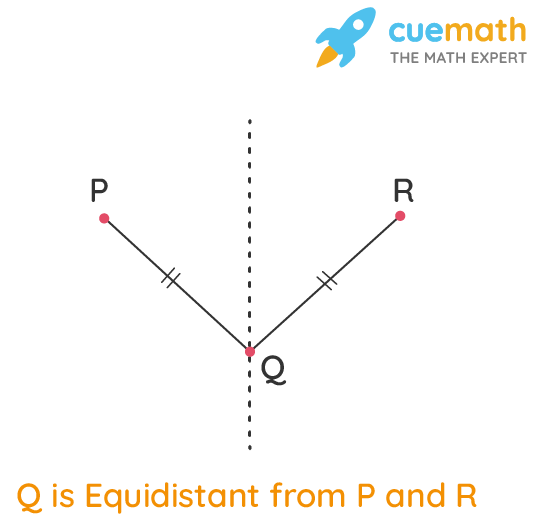
At its most fundamental, equidistante significado is undeniably geometric. Imagine a point that lies precisely in the middle of two other points, or a line that is perpetually the same distance from two parallel lines. This is the essence of equidistance in mathematics: a state of perfect spatial balance. In geometry, this property is crucial for defining shapes, understanding symmetry, and solving complex spatial problems. For instance, the perpendicular bisector of a line segment is equidistant from its endpoints, and the center of a circle is equidistant from all points on its circumference.
This clarity and precision inherent in its geometric definition provide a robust framework for understanding its metaphorical applications. When we speak of being equidistant in other domains, we are essentially borrowing this notion of precise, measurable balance and applying it to abstract relationships, power dynamics, and ideological divides. It's about finding that metaphorical "middle ground" that is neither biased towards one side nor the other, reflecting a deliberate strategic choice rather than a passive outcome. To delve deeper into the fundamental definition, you might find Equidistant Meaning: Unpacking Its Latin Roots and Definition to be an illuminating read.
"Equidistante Significado" in the Political Arena: Navigating Ideological Divides
Moving beyond the abstract planes of geometry, the concept of equidistance finds significant practical application in the often tumultuous world of politics. Here, an equidistante significado refers to a position of neutrality, impartiality, or fairness adopted by an entity—be it an individual, a political party, or an institution—when faced with competing factions, ideologies, or policy debates. It suggests a deliberate effort to avoid alignment with any single side, thereby positioning oneself as a balanced observer or mediator.
Consider a political leader who aims to unite a divided electorate. By adopting an equidistant stance, they might propose policies that draw support from various ideological spectrums, avoiding extreme positions held by either the left or the right. This approach can be seen in judicial systems, where judges are expected to be equidistant from the plaintiff and defendant, ensuring impartial justice. Similarly, regulatory bodies often strive for equidistance from different industry players to ensure fair competition and protect consumer interests.
The benefits of political equidistance can be substantial: fostering dialogue, building consensus, and enhancing credibility. By not overtly favoring one group, an equidistant actor can often gain the trust of all parties, making them an effective facilitator of resolution. However, this path is not without its challenges. Critics might view equidistance as indecision, fence-sitting, or a lack of conviction. Striking the right balance between impartiality and decisive leadership is a constant tightrope walk, requiring astute judgment and a clear understanding of the broader context.
Diplomatic Equidistance: A Cornerstone of International Relations
Perhaps the most compelling and strategic application of equidistante significado lies in the realm of international relations. Here, it describes a diplomatic posture of non-alignment, where a nation chooses to remain impartial between rival global powers, blocs, or geopolitical conflicts. This strategic neutrality allows a country to maintain its sovereignty, avoid entanglement in proxy wars, and foster economic and political relationships with a diverse range of partners without being beholden to any single dominant force.
Historical examples abound. Switzerland's enduring neutrality, codified in international law, is a prime illustration of a nation maintaining an equidistant stance through centuries of European conflicts. The Non-Aligned Movement (NAM), founded during the Cold War, provided a collective platform for nations to resist pressures from both the United States and the Soviet Union, asserting their right to independent foreign policies. These countries deliberately positioned themselves equidistant from the superpowers, advocating for peaceful coexistence and multilateral cooperation.
The advantages of diplomatic equidistance are manifold:
- Enhanced Mediation: An equidistant state can often serve as a credible mediator in international disputes, as it is not perceived as having a vested interest in the outcome beyond peace and stability.
- Sovereignty Preservation: It allows nations to make independent decisions based on their national interests rather than external pressures.
- Economic Flexibility: Such a stance can facilitate trade and investment with various global partners, diversifying economic dependencies.
- Reduced Risk of Conflict: By not aligning with one side, a nation can reduce its vulnerability to becoming a target in proxy conflicts.
However, maintaining diplomatic equidistance demands extraordinary skill and resilience. Nations adopting this stance must navigate complex geopolitical currents, resist economic or political coercion, and constantly reaffirm their neutral position through consistent policy and action. For a deeper dive into how this concept stretches from geometrical points to sophisticated geopolitical strategies, explore What Equidistant Means: From Geometrical Points to Neutral Stances.
The Nuances and Challenges of an Equidistant Stance
While the aspiration for equidistance is often noble, its practical implementation is rarely straightforward. Whether in internal politics or global diplomacy, true equidistance is a dynamic state that requires continuous calibration. Factors such as shifts in power dynamics, changing international alliances, and domestic pressures can test the resolve of any entity attempting to remain equally distant.
One of the primary challenges is the perception of passivity or moral relativism. In situations involving clear aggressors and victims, for instance, an equidistant stance might be criticized for failing to take a moral stand. The line between impartiality and indifference can sometimes appear blurred, making clear communication of one's intent crucial. Furthermore, maintaining equidistance often means forgoing potential benefits that come with aligning with a powerful patron, requiring a strong sense of self-reliance and strategic foresight.
For individuals, striving for equidistance in personal or professional conflicts means actively listening to all sides, acknowledging different perspectives, and resisting the urge to take sides prematurely. It involves empathetic understanding and a commitment to fair process. For organizations, it translates to establishing clear, unbiased policies and fostering an inclusive culture that values diverse viewpoints without favoring one group over another.
Conclusion
The journey from the precise definition of "equidistant" in geometry to its nuanced and strategic applications in politics and diplomacy reveals a term of profound utility. The equidistante significado embodies a powerful ideal: the ability to maintain balance, impartiality, and strategic non-alignment in a world constantly pulling in different directions. Whether it's a judge ensuring fairness in a courtroom, a political leader seeking consensus, or a nation navigating the treacherous waters of international rivalry, the deliberate choice to be equally distant can be a powerful tool for fostering stability, promoting dialogue, and preserving autonomy. In an era marked by increasing fragmentation, understanding and aspiring to equidistance offers a valuable compass for navigating complexity with integrity and purpose.